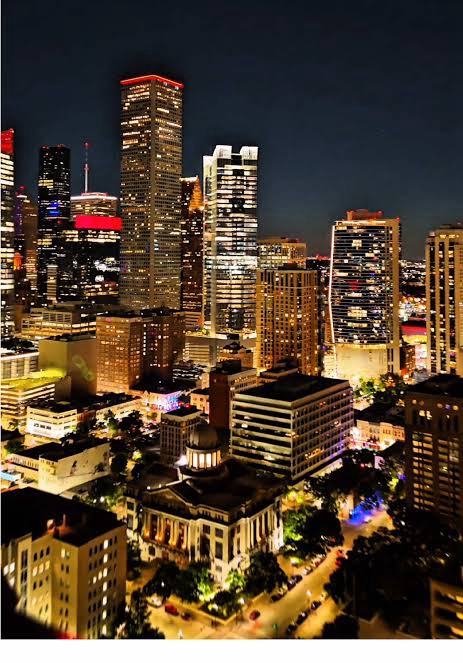
There’s a version of the city that only exists after dark.
It’s not the one you see in the morning rush or the afternoon crowds. It’s quieter, but somehow more alive. The lights take over. The noise softens into a rhythm. And the city begins to feel… infinite.
Night doesn’t just change how a city looks.
It changes how it feels.
A Different Kind of Energy
During the day, cities are about purpose.
People are working, commuting, moving with intention. Everything feels structured—like the city is running on a schedule.
But at night, that structure loosens.
People wander. Conversations last longer. Streets feel less like corridors and more like places. The city breathes differently.
In places like Houston, you can feel this shift in subtle ways—parking lots that double as gathering spaces, late-night food spots glowing under streetlights, the skyline reflecting off glass and pavement in a way that feels almost cinematic.
The Glow of the Skyline
There’s something about a skyline at night that hits differently.
Buildings that feel distant during the day suddenly feel close. Windows light up like individual stories stacked on top of each other. You start to think about the lives inside them—people working late, relaxing, dreaming, figuring things out.
From certain vantage points, like a park or an overpass, the city stops feeling like infrastructure and starts feeling like a living thing.
It’s not just something you’re in.
It’s something you’re experiencing.
Freedom in the Darkness
Night brings a kind of freedom that’s hard to explain.
Maybe it’s the reduced pressure. Maybe it’s the anonymity. Maybe it’s just the way darkness softens everything.
But walking through a city at night feels different than during the day. You’re less rushed. More reflective. More open to the moment.
You notice things you would normally miss:
The hum of distant traffic echoing through empty streets The flicker of neon signs The way shadows reshape familiar places
The city becomes less about where you’re going—and more about where you are.
Moments That Stay With You
Some of the most memorable experiences in a city happen at night.
A quiet walk after a long day.
A late-night conversation that changes how you see things.
A moment of clarity while looking out at a skyline.
These aren’t big, dramatic events. They’re small, personal moments—but they stay with you.
Because at night, the city feels more personal.
The Balance of Solitude and Connection
Just like during the day, you’re never truly alone in a city at night—but it can feel like you are.
There’s a balance between solitude and connection that becomes even more pronounced. You can exist in your own world while still being surrounded by others doing the same.
Everyone is on their own path, but for a moment, those paths overlap.
And that’s enough.
Why the Night Matters
If you only experience a city during the day, you’re only seeing half of it.
Night reveals a different personality—one that’s more emotional, more reflective, and sometimes more honest.
For creators, thinkers, and anyone trying to understand what a city really is, nighttime isn’t just an aesthetic.
It’s essential.
Final Thoughts
Cities don’t shut down when the sun goes down.
They transform.
And in that transformation, you might find something you didn’t even realize you were looking for.
So take a walk at night.
Look at the skyline.
Let yourself slow down.
Because sometimes, the city makes the most sense… when it’s lit up in the dark.
 CityStories
Leave a comment